A fully responsive site template designed by HTML5 UP and released
for free under the Creative Commons license.
Countdown to Next F1 Race
History of Formula One
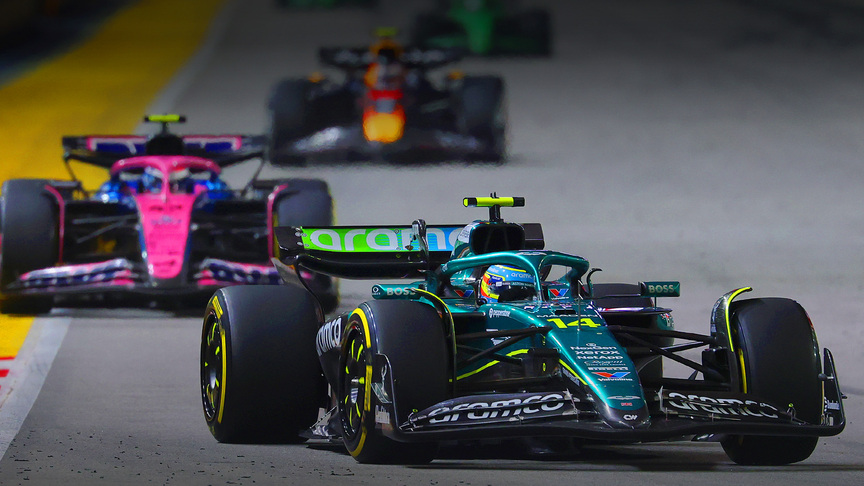
“Formula One is the pinnacle of motorsport” is a sentence said often during interviews and articles in Formula One journalism. It is a type of motorsport where race cars drive around a uniquely shaped track to win a championship. Formula One has been around since 1950 and has flourished as a year-round event.
In Motorsport, the word ‘Formula’ means a set of rules that competitors must follow, such as engine sizes, car covers, and auto parts, and the word ‘One’ just means the leading formula. Formula One cars are some of the fastest racing cars in the world and run with thousands of various parts. Each part may only be used a certain number of times or else a penalty will affect the driver’s place after the race finishes. Aerodynamic tunnel systems are built into the cars to make it easier for them to flow through the air.
Since the late 1800s, Motorsport has been an eventful part of history. Races used to be separate events, and winning a Grand Prix came with high praise and significance. The Formula One Driver’s Championship first took place in 1950, but the Constructor’s Championship, which is the competition of the best Formula One team, did not begin until 1958 with the winner Vanwall Formula One team over Ferrari.
At the beginning of the Formula One motorsport races, drivers used to have to pre-qualify for qualifying- but that was abolished in 1992, according to Simon Lazenby. From 1950- 1996, Qualifying was set as two one-hour-long sessions for each driver to set their place in the main race. After that, in 1996 Qualifying gave a stricter time limit of one hour and drivers could only do twelve laps. The FIA, founded in 1904 to regulate the many financial and technical rules that drivers and teams must follow, made qualifying much tougher in 2016 with an elimination system that was so difficult for drivers, that they were dropping like flies every 90 seconds.
F1 Stats
As a remarkably successful team, Ferrari has won 16 Formula One Constructor’s World Championships since 1950 and has the most victories out of all the teams in Motorsport with 243 to date, followed by McLaren with 183 and Mercedes with 125. Both McLaren and Mercedes have 8 Constructor’s Championship titles, but Williams pulls ahead of them with just nine. Although Red Bull is the current Constructors Champion, they have the least number of races wins with only 113. It is most likely that the champion driver comes from the champion team, but in only a few cases has the winning driver come from a different team. One of only ten was in 2021 when Max Verstappen in a Red Bull won the Drivers' Championship, but Mercedes won the Constructor’s. (Lazenby)
“In 1997, Jacques Villeneuve set a time of 1m 21.072s and then – to the millisecond- rival Michael Schumacher matched it. Unbelievably, Heinz-Harald Frentzen then matched it as well. However, Villeneuve took pole (position) having set his time first,” (Lazenby).
The number of laps in a race depends on the speed of the circuit and how long it takes to reach a minimum distance of 305 kilometers (or 189.52 miles). The only track that has an exception to this rule is Monaco, where the speeds are slower because it is a street circuit with many sharp turns and corners, as opposed to the other tracks which are open and only has a few sharp turns. The length of the Monaco track is equivalent to the least number of laps it takes to surpass 260 km (or 161.6 miles).
F1 Points Calculator
Imagine you are a Formula One driver, and you just finished a race. Enter your finishing position (1–10) to find out how many points you recieved!
Weekend Events
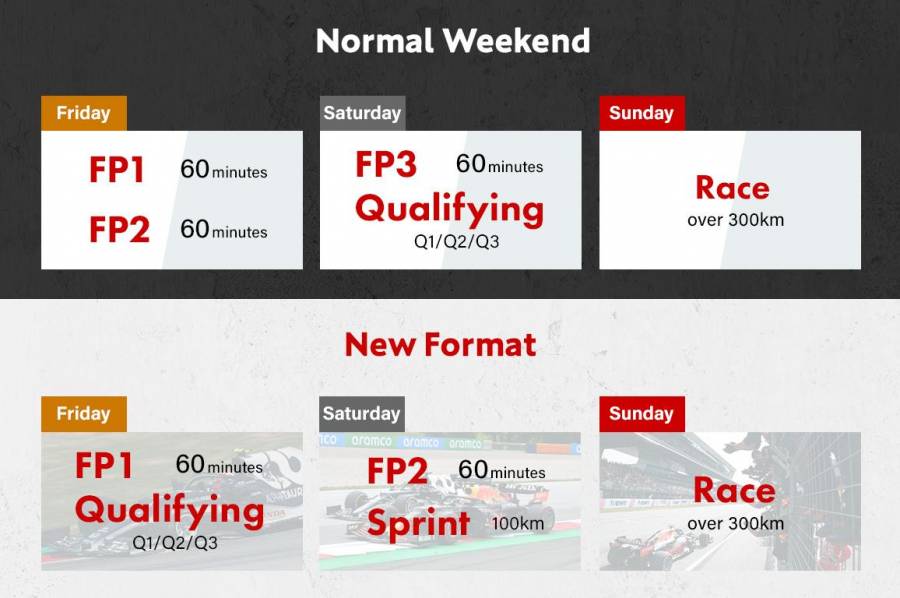
A race weekend consists of three practice sessions, a qualifying session, and the race itself all happening over Friday, Saturday, and Sunday. FP1 on Friday lets the teams assess the car to make sure it runs as it should and performs properly. FP2 is also on Friday and is reserved for longer runs in the car to prepare the drivers and pit-stop teams for the race. FP3 runs on Saturday and makes the drivers concentrate on shorter laps to get ready for the qualifying session. Saturday hosts Qualifying, which is a three-stage race session to set the lineup for Sunday’s race. Each section of qualifying is called Q1, Q2, and Q3 as each number stands for the progressiveness of the qualifying session. Q1 is the first section of Qualifying that lasts 18 minutes and knocks out the five slowest drivers first, then Q2 is 15 minutes and eliminates five more drivers. The final 12-minute Q3 makes the top ten grid slots. The race on Sunday can last about an hour-and-a-half to two hours, depending on if there are red flags stopping the race, or a safety car which slows the drivers to get crashed cars or rubble off the track.
On Sunday, the day starts with the reconnaissance lap which is a slower lap around to park in their designated grid spots and make any last-minute adjustments before they walk to the finish line for the country’s national anthem. Next, the drivers get back in their cars and begin the formation lap, which is one full lap around the track swerving side to side to warm up their tires so they can get more traction.
The start of the race is when the five red lights at the front go on one by one, then they all go out to mark the start of the Grand Prix.
Calendar
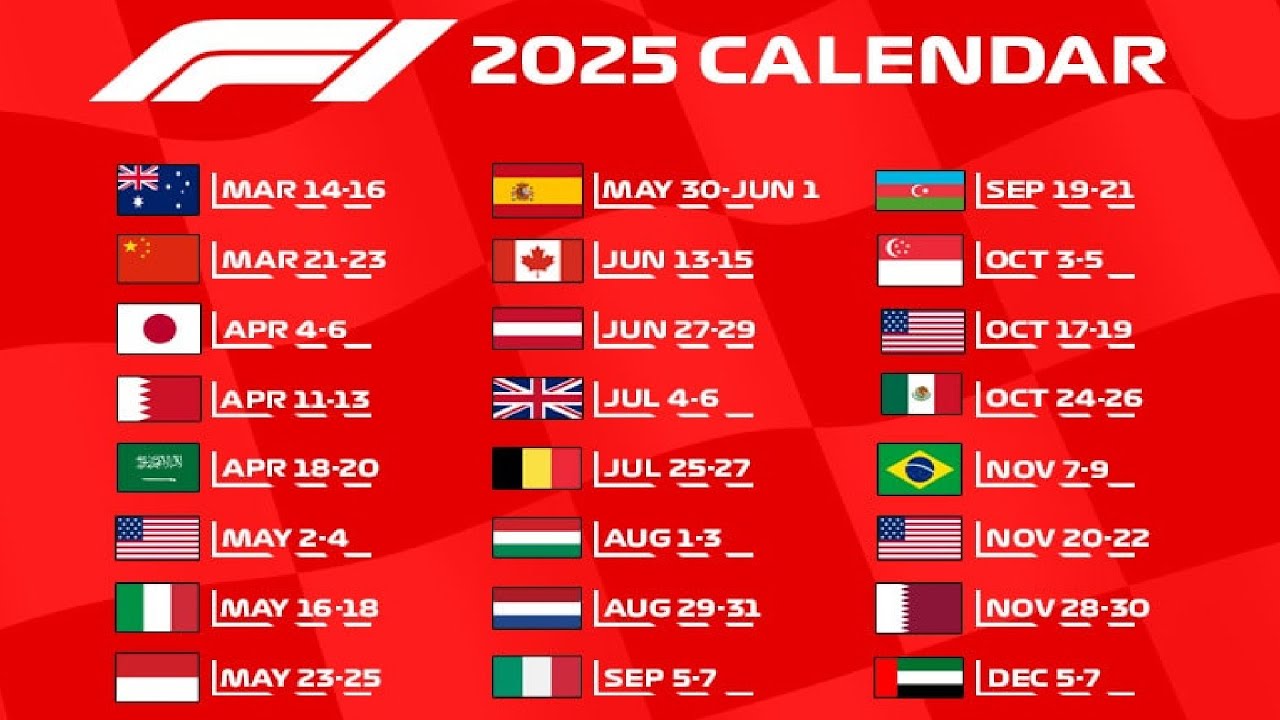
In the first few race seasons, the calendar was made up of only seven races scheduled from May to September, six of which were held in Europe. This is different from modern Formula One where there are about twenty-four races scheduled from February to December and taking place all over the world. This season, the first two races are held in Sakhir, Bahrain and Jaddah, Saudi Arbia on March 2 and 9. Because of Ramadan, these two circuits are the only races that will take place for the first time on a Saturday. On December 8, the 2024 Formula One season will end at the Yas Marina Circuit in Abu Dhabi.
The calendar is filled with many classic tracks from the first race, such as Silverstone in Great Britian, Spa in Belgium and the Circuit de Monaco in Monte Carlo, Monaco. The newest tracks to the schedule are the Las Vegas Circuit in Nevada and the Miami track in Florida, which is built around the Hard Rock Stadium temporarily on the race weekend in May. In the past, race weekends were scheduled every other weekend to give the drivers more training time, but since there are so many races to pack into one year some weekends are double-headers, where there are two race weekends consecutively, or sometimes triple-headers, where there are three race weekends in a one after another.
Formula One is not just races weekend after weekend, there are Sprint races too which are smaller, and more lively than strategic races with no required pit-stops, only lasting about one-third of a normal Grand Prix. They are 100km and approximately 30 minutes. The top eight drivers and teams are awarded points scaling down from eight to one, which helps towards championship scoring. The Sprint weekend still holds the big race, but the schedule is rearranged. On Friday, the Sprint Qualifying substitutes FP2 and the Sprint race happens on Saturday ahead of Qualifying, which occurs as normal. There are only six race weekends that include Sprints this season: Brazil, Austria, China, Quatar, Miami and Austin.
Elements
Text
This is bold and this is strong. This is italic and this is emphasized.
This is superscript text and this is subscript text.
This is underlined and this is code: for (;;) { ... }. Finally, this is a link.
Heading Level 2
Heading Level 3
Heading Level 4
Heading Level 5
Heading Level 6
Blockquote
Fringilla nisl. Donec accumsan interdum nisi, quis tincidunt felis sagittis eget tempus euismod. Vestibulum ante ipsum primis in faucibus vestibulum. Blandit adipiscing eu felis iaculis volutpat ac adipiscing accumsan faucibus. Vestibulum ante ipsum primis in faucibus lorem ipsum dolor sit amet nullam adipiscing eu felis.
Preformatted
i = 0;

while (!deck.isInOrder()) {
    print 'Iteration ' + i;
    deck.shuffle();
    i++;
}

print 'It took ' + i + ' iterations to sort the deck.';